Discovery Phase
Understanding the Business, Not Just the Brief
We start with your audience, competitors, and what the site actually needs to do — not just how it should look. A brief that skips this step usually gets rebuilt six months later.
Menu
Menu
Close
Close
The same six steps for every project — including where AI tools speed up our design and development work, and where a person still reviews everything.
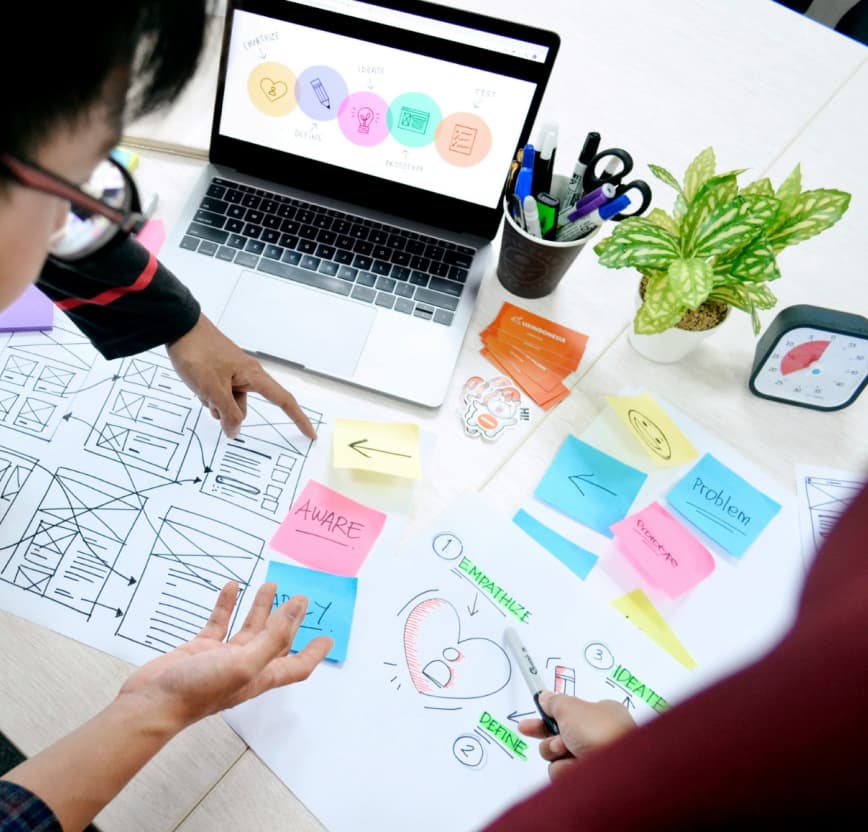
We work through the same six stages on every project: discovery, planning, design, development, testing, and launch. We use AI tools — Figma's AI features for design, Cursor and Claude for development — to move faster through the repetitive parts. Every stage still gets reviewed by a person before it moves to the next one.
We start with your audience, competitors, and what the site actually needs to do — not just how it should look. A brief that skips this step usually gets rebuilt six months later.
We lay out the site's structure, page hierarchy, and user flow first. Designing before this exists is how projects end up with a homepage that looks great and a checkout flow nobody thought through.
We design in Figma and use its AI features to speed up early exploration — testing layout variations and content states faster than doing it all by hand. Every screen still gets a human pass before it moves to development.
Our developers use Cursor and Claude to move faster through boilerplate and repetitive code, which frees up time for the parts that actually need a person: architecture calls, edge cases, and code review. Nothing reaches your site without a developer reading it first.
We test across browsers and devices, fix what breaks, and check load times before anything goes live. Skipping this is how broken forms and layout bugs end up in front of real visitors.
We handle the launch itself and stay reachable afterward for the fixes and small changes that always come up once real users start clicking around.
Tell us what you're building and we'll follow up with real next steps — not a sales script.